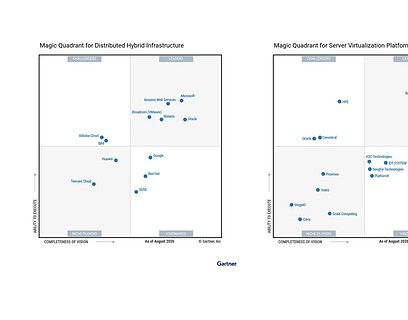
Most organizations first encounter Azure Local during a virtualization review. The discussion then often follows a familiar path: cost per core, VM density, and feature parity with the existing platform. That is a sensible starting point, but evaluating Azure Local only as a hypervisor overlooks the broader platform and operating model.
Microsoft positions Azure Local as the infrastructure foundation of Sovereign Private Cloud. The broader platform extends beyond infrastructure to Kubernetes, selected data and application services, local AI, sovereign productivity, and a self-hosted developer platform. This article makes the case for a broader evaluation, platform against platform and operating model against operating model, while remaining clear about what is available for each deployment model.
Virtualization is a capability. A sovereign private cloud is a platform and an operating model.
A virtualization renewal is no longer only a licensing or hypervisor decision. It is an opportunity to decide whether the next platform should simply continue running today’s virtual machines or also provide a consistent foundation for cloud operations, Kubernetes, AI, resilience, and sovereign workloads.
Why the virtualization comparison is understandable – but incomplete
Azure Local runs Windows and Linux virtual machines on validated hardware in your datacenter. If the immediate question is where and how to run VMs, it fits naturally into the conversation.
A virtualization-only comparison, however, leaves important requirements out of scope: how Kubernetes clusters are provisioned and governed, how policy is applied across distributed sites, how AI inference runs close to sensitive data, where source code and build artifacts reside, and how critical services continue during extended connectivity interruptions.
These requirements remain part of the architecture. Addressing them through a unified platform can reduce the need for separate products, subscriptions, integrations, and operating processes.
Virtualization is a capability; private cloud is an operating model
The clearest way I have found to frame this is as three questions:
- Traditional virtualization answers: how do I run and manage virtual machines?
- A private cloud platform answers: how do I consistently deliver, govern, secure, automate, update, scale and evolve infrastructure and application services?
- A sovereign private cloud adds: how do I do all of that under customer-controlled data, infrastructure, operational and connectivity boundaries?
Each question is legitimate. They are simply different sizes. And the size of the question you ask determines the size of the answer you will be able to evaluate.
Azure Local: the foundation of Microsoft Sovereign Private Cloud
Microsoft Sovereign Cloud brings together multiple deployment models in one portfolio. Sovereign Public Cloud runs in Microsoft-operated datacenters within defined geopolitical boundaries and adds controls such as Data Guardian, Data Boundary, and External Key Management. Sovereign Private Cloud is customer-controlled or partner-operated and can run in connected, hybrid, or disconnected configurations. National Partner Clouds, including Bleu in France and Delos Cloud in Germany, are independently operated environments whose availability varies by jurisdiction.
At the center of Sovereign Private Cloud is Azure Local. It provides the compute, storage, networking, and lifecycle-management foundation for services such as Microsoft 365 Local, GitHub Enterprise Local, and Foundry Local on Azure Local.
Azure Local is full-stack infrastructure software designed to run only on validated hardware, from Validated Nodes and Integrated Systems to turnkey Premier Solutions listed in the Azure Local Catalog. Azure Arc provides the connection to the unifying Azure control plane either in connected mode or deployed on-premises using Azure Local Disconnected Operations. Billing is based on physical cores through your existing Azure subscription.

The platform is designed to support a broad range of deployment sizes. Current documented configurations start with a single machine and scale to 16 machines in a standard hyperconverged instance, up to 8 in rack-aware deployments, and up to 64 with SAN-based disaggregated storage. For larger environments, multi-rack deployments can extend into the hundreds of machines, alongside the small form factor configuration for edge and branch locations. Microsoft also announced in April 2026 that Sovereign Private Cloud can scale to thousands of servers within a single sovereign environment, highlighting the platform’s long-term potential for even the largest deployments.
Comparing Azure Local only to a hypervisor is comparing a foundation to a finished house.
Bringing cloud value into customer-controlled environments
Azure Local brings the value of cloud into customer-controlled datacenters and edge environments. Organizations can extend familiar Azure management, governance, automation, security, and infrastructure-as-code practices across their estate while retaining control over infrastructure, data, resilience, capacity, and connectivity.
Beyond virtual machines, the platform supports Kubernetes, selected data and cloud services, and local AI close to users and data. This creates a consistent foundation for low-latency applications, sovereign workloads, connected or disconnected operations, and a practical path from migration to modernization and innovation.

The Microsoft cloud continuum
Modern infrastructure is best viewed not as cloud versus on-premises, but as a continuum of options. Azure, Sovereign Public Cloud, Sovereign Private Cloud with Azure Local, connected or disconnected edge environments, and National Partner Clouds can form one flexible strategy. Organizations can place each workload where it delivers the greatest value for innovation, latency, resilience, sovereignty, data control, and operational independence. Consistent management, governance, identity, deployment, and automation patterns also improve portability and recovery across suitable environments, giving critical workloads more than one viable place to run.

One control-plane model, tailored to each deployment
A major advantage of Azure Local is a consistent control-plane model that helps teams manage resources across Azure, datacenters, and edge locations. Organizations can reuse familiar approaches to identity, access, policy, inventory, automation, and deployment while choosing the connectivity and service model that best fits each environment.
- Connected operations: Azure provides a central control plane with rich integration across management, governance, monitoring, and cloud services.
- Disconnected operations: A locally deployed control plane enables selected infrastructure and platform services to operate with greater autonomy, including environments without continuous cloud connectivity.
- Cloud-enhanced capabilities: When connectivity is available, organizations can extend local environments with additional Azure-based management, brokering, monitoring, and innovation services.
This consistency creates a powerful operational advantage. Teams can standardize deployment and governance, reuse automation and skills, reduce fragmentation, and gain clearer visibility across the estate. Service availability can be aligned to each deployment model, while the common platform approach keeps cloud, datacenter, and edge environments connected as parts of one adaptable operating model.

Platform capabilities beyond virtual machines
Azure Local is where the platform story becomes tangible. Beyond hosting virtual machines, it provides a foundation for traditional applications, Kubernetes and cloud-native services, local AI, sovereign productivity, DevSecOps, data services, and virtual desktops and all operating closer to the people, devices, and data they serve. Together, these capabilities give organizations a practical way to migrate today’s workloads, modernize at their own pace, and introduce new cloud-consistent services within customer-controlled environments.
Virtual machines
Azure Local provides a modern platform for running and managing Windows and Linux virtual machines. It supports consistent provisioning, governance and automation using familiar Azure management tools.
Azure verification for VMs
Azure verification for VMs is a built-in platform attestation service, enabled by default on Azure Local, that allows supported Azure-exclusive workloads and benefits to operate on verified VMs outside the Azure public cloud.
- Azure Virtual Desktop: Activate supported Windows multi-session session hosts on Azure Local while retaining applicable AVD licensing requirements.
- Windows Server Datacenter: Azure Edition: Run supported Azure Edition VMs and use Azure-specific Windows Server capabilities on Azure Local.
- Azure Update Manager: Centrally manage and govern software updates for eligible Azure Local VMs, with the service available at no additional cost in supported scenarios.
- Azure Machine Configuration: Audit and configure operating-system settings as code for supported machines and VMs at no additional cost.
Availability, licensing, operating-system versions, update levels, connectivity, and legacy OS requirements vary by benefit and should be verified for each intended workload and deployment model.
Kubernetes and cloud-native applications
AKS on Azure Local extends the platform to containers and Kubernetes. Organizations can run virtual machines and cloud-native applications side by side, modernizing workloads gradually rather than rewriting everything at once.
Data and application services
Selected Microsoft, partner and open-source data and application services can run on the platform. The available catalog is intentionally smaller than Azure public cloud and varies by deployment model, version and connectivity.
AI
Foundry Local enables organizations to run AI models close to their data on Azure Local, including in disconnected environments. This supports sovereign AI scenarios where data, models and operations need to remain within controlled boundaries.
Productivity
Microsoft 365 Local brings selected productivity server workloads to customer-controlled Azure Local infrastructure. It is designed for organizations that need local ownership and operation of these services.
DevSecOps
GitHub Enterprise Local provides a locally hosted developer platform for source code, collaboration, software delivery and security workflows. It helps extend sovereignty from applications and data to the software supply chain.
Virtual desktops
Azure Virtual Desktop can place session hosts on Azure Local while using Azure-based management services. This supports local data placement and low-latency access where a cloud connection is available.
Together, these capabilities show why Azure Local should be evaluated as a platform rather than only as a virtualization product. Exact service availability and maturity should always be verified for the intended deployment model.
Security, reliability, redundancy, and resilience
Azure Local combines security, availability, protection, governance, and operational flexibility to provide a strong foundation for resilient services. Each capability reinforces the others, helping organizations design confidently for everyday reliability, disruption scenarios, and long-term business and sovereign continuity.
- High availability: Failover clustering helps workloads remain available by automatically responding to machine failures within an Azure Local instance.
- Backup and restore: Microsoft Azure Backup Server and a broad ecosystem of partner solutions provide options for protecting Azure Local virtual machines and recovering data in line with organizational requirements.
- Disaster recovery: Azure Site Recovery and partner solutions enable organizations to plan replication, failover, and recovery across Azure and secondary locations, creating flexible paths for workload protection.
- Site resilience: Deliberate architecture across racks, rooms, or sites allows organizations to align workload placement and redundant capacity with the failure domains that matter most to them.
- Cloud-connected resilience: Azure services can extend local protection with centralized monitoring, orchestration, backup, and recovery capabilities.
- Disconnected operational continuity: Local workloads and management capabilities can continue operating through connectivity interruptions, supporting environments that require greater operational independence.
- Business and sovereign continuity: The Microsoft cloud continuum gives organizations multiple viable places to run and recover suitable workloads across Azure, Sovereign Public Cloud, Azure Local sites, disconnected environments, edge locations, and other sovereign deployments. Combined with thoughtful architecture, tested procedures, clear responsibilities, and resilient operational practices, this flexibility strengthens both continuity and operational sovereignty.
Governance and security operations build on the same platform approach. Azure Policy, Azure RBAC, auditing, monitoring, coordinated updates, validated hardware, and security-event forwarding help teams apply consistent controls and maintain visibility across connected and disconnected environments.
The greatest value comes from turning these capabilities into an integrated continuity strategy. Azure Local provides powerful building blocks for availability, protection, governance, monitoring, and operational independence, while the broader cloud continuum expands the options for workload placement, mobility, recovery, and service continuity. Organizations can use this foundation to design the architecture, controls, processes, and evidence that best support their business, regulatory, and sovereignty requirements.
From migration to modernization and innovation
Azure Local provides a practical, value-driven path to transform at the pace that works best for the organization. Each stage delivers benefits on its own while building a stronger foundation for the next.
- Migrate. Move suitable existing virtual-machine workloads to Azure Local with minimal application change, creating a modern infrastructure foundation and an immediate path away from the incumbent platform.
- Standardize. Introduce consistent provisioning, Azure Policy, RBAC, monitoring, update management, security baselines, and infrastructure-as-code practices to improve efficiency, governance, and visibility across the estate.
- Modernize. Adopt AKS, containers, modern APIs, GitOps, and data services where they create meaningful technical and business value, without requiring every workload to change at once.
- Innovate. Unlock new opportunities with local AI, sovereign productivity, DevSecOps, edge processing, and resilient distributed applications running close to users and data.
This progressive approach turns migration into a platform opportunity rather than a one-time infrastructure event. Organizations can generate value quickly, build operational consistency, modernize selectively, and continuously introduce new capabilities as priorities and requirements evolve.
Customer scenarios
Sovereign Private Cloud creates the greatest value when its capabilities are aligned to real business and mission outcomes. These scenarios show how Azure Local can combine cloud-consistent operations, resilience, local AI, application modernization, productivity, and DevSecOps to help organizations strengthen continuity, accelerate innovation, and maintain control across datacenter, edge, and disconnected environments.
- Strengthen sovereign resilience and business continuity. Keep mission-critical applications, identity, management, data, and recovery capabilities locally operable through connectivity disruptions or crisis conditions, supported by a coordinated continuity design.
- Build a local AI or AI factory platform. Run inference and data processing close to the source on GPU-enabled infrastructure with Kubernetes-based operations, helping sensitive data remain within controlled environments while enabling new AI scenarios in manufacturing, public safety, healthcare, financial services, and critical infrastructure.
- Modernize beyond traditional virtualization. Move suitable Windows and Linux VMs with minimal initial change, introduce Azure-consistent operations, and progressively modernize selected applications to create value at a practical pace.
- Deliver a sovereign application and cloud-services platform. Operate VMs, AKS, selected data services, partner solutions, open-source platforms, and custom applications through a common governance, automation, and lifecycle model.
- Extend sovereignty to productivity and DevSecOps. Use Microsoft 365 Local and GitHub Enterprise Local to keep selected productivity workloads, source code, artifacts, pipelines, identity dependencies, and operational processes within controlled boundaries.
The same platform approach also creates strong opportunities for distributed retail and branch infrastructure, manufacturing and operational technology, healthcare and regulated data processing, defense and air-gapped operations, low-latency virtual desktops, and remote sites with intermittent connectivity.
A balanced comparison with virtualization-centric alternatives
A platform evaluation is an opportunity to build on existing strengths while identifying the operating model that best supports future priorities. A balanced comparison can recognize proven virtualization investments and also explore the additional value available through a broader sovereign cloud platform.
Established platforms from VMware, Red Hat, and others provide mature virtualization capabilities, broad ecosystems, and valuable operational expertise. These strengths create a solid baseline for comparison and help organizations clearly define the outcomes they want from their next platform.
Microsoft Sovereign Private Cloud with Azure Local expands that opportunity through an integrated experience spanning infrastructure, Azure management and governance, Kubernetes, application and data services, AI, productivity, security, and developer capabilities. A consistent platform and operating model can simplify integration, extend existing Azure skills, streamline lifecycle management, strengthen resilience, and accelerate modernization and innovation.
The most useful comparison is therefore platform against platform and operating model against operating model. By evaluating workload requirements, sovereignty, continuity, service availability, skills, existing investments, operational simplicity, and total lifecycle value, organizations can make a confident choice that supports both immediate needs and long-term strategic goals.

Key takeaways
- Use the Microsoft cloud continuum as the strategic foundation: bring Azure, Sovereign Public Cloud, Azure Local, disconnected and edge environments, and National Partner Clouds together in one adaptable platform strategy, placing each workload where it delivers the greatest value for innovation, performance, resilience, sovereignty, and operational independence.
- Azure Local goes beyond virtualization: it runs virtual machines while providing the infrastructure foundation for Microsoft Sovereign Private Cloud and a broader portfolio of sovereign capabilities.
- Evaluate the full platform opportunity: virtualization is a core capability, while a private cloud adds an integrated platform and operating model for delivering, governing, and evolving services consistently.
- Extend familiar Azure practices: a consistent resource, governance, and automation model enables teams to reuse cloud skills, tools, and processes across Azure, datacenter, and edge environments.
- Choose the right place and operating model for every workload: the continuum combines connected and disconnected options so organizations can align service availability, data control, latency, resilience, and operational independence with each workload’s requirements.
- Create value step by step: migrate suitable workloads, standardize operations to compound efficiency, and then modernize and innovate at the pace that delivers the strongest business outcomes.
- Plan with clarity and confidence: understanding generally available, preview, and eligibility-based capabilities helps teams build realistic roadmaps and adopt new value as it becomes available.
- Strengthen business and sovereign continuity across the continuum: design suitable workloads with multiple viable places to run or recover across Azure, Sovereign Public Cloud, Azure Local sites, edge locations, disconnected environments, and other sovereign deployments.
- Run sovereign AI where it creates the most value: Foundry Local on Azure Local extends AI across the continuum by enabling generative and predictive models on CPU- or GPU-enabled infrastructure close to sensitive data, including connected and disconnected environments.
Where to go next
Start by defining the outcomes your next platform should enable: the workloads it must support, the operational experience you want to create, the sovereignty and availability requirements it must meet, and the modernization opportunities you want to unlock. From there, evaluate Azure Local against that target operating model, validate the architecture through a representative production pilot, and build a confident, evidence-based migration roadmap. Please feel free to reach out, I would be happy to discuss your scenarios, architecture, and next steps.
Tags: AI, Azure, Azure Virtual Desktop, Cloud, Foundry Local, GitJHub Enterprise Local, Hyper-V, M356 Local, Microsoft, Microsoft Azure, Sovereign Cloud, Sovereign Private Cloud, Virtualization, Windows Server Last modified: September 23, 2026