, , , , ,

Run Windows Admin Center on Windows Server Core

Run Windows Admin Center on Windows Server Core

Windows Admin Center is a locally deployed, browser-based app for managing servers, clusters, hyper-converged infrastructure, and Windows 10 PCs. If you ever asked yourself if Windows Admin Center (WAC) runs on Windows Server Core, the answer is yes. Run and install Windows Admin Center on Windows Server Core, simply copy the MSI installer to the Windows Server, or download it directly. If you are running Windows Server in a Hyper-V virtual machine, PowerShell Direct and be very handy to copy files using the VMBus from the Hyper-V host to the virtual machine.
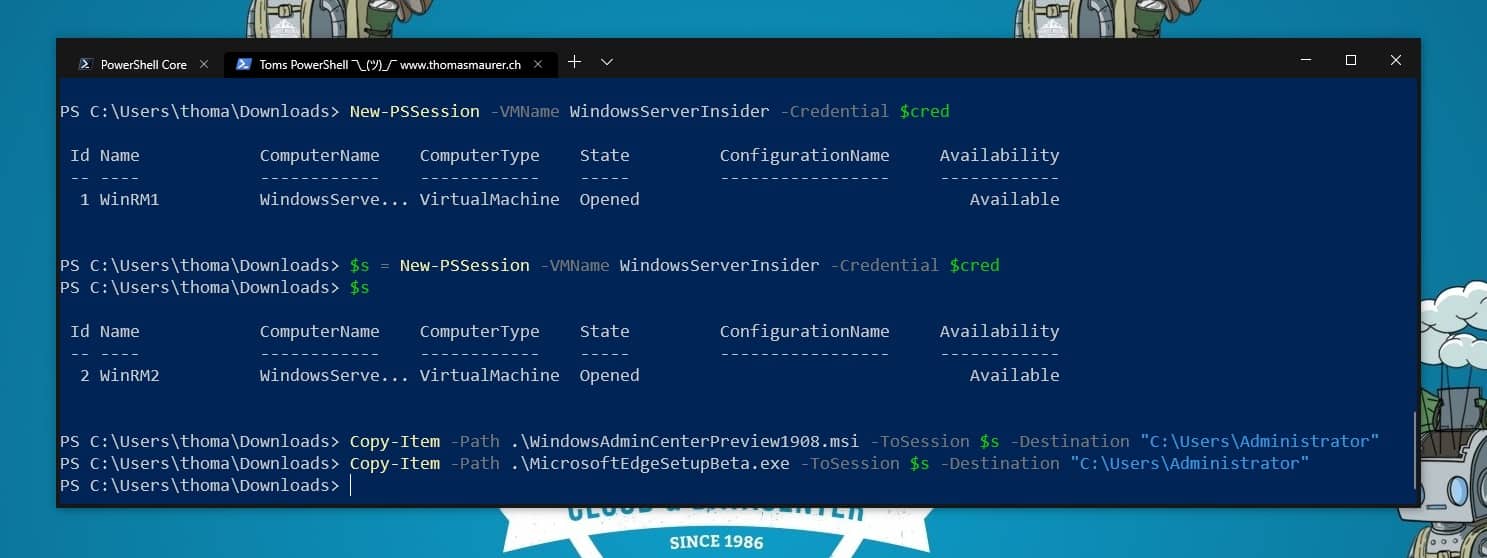
Copy Windows Admin Center MSI to Windows Server Core VM PowerShell Direct

Download Windows Admin Center (WAC) from here. You can simply use the following commands on your Hyper-V host to copy a file using PowerShell Direct.

$cred = Get-Credential
$s = New-PSSession -VMName WindowsServerInsider -Credential $cred
Copy-Item -Path .\WindowsAdminCenterPreview1908.msi -ToSession $s -Destination "C:\Users\Administrator"

Now you can run the MSI installer for Windows Admin Center. There is also an unattended option for WAC on Windows Server Core. You can find more about installing WAC here.

Install Windows Admin Center on Windows Server Core

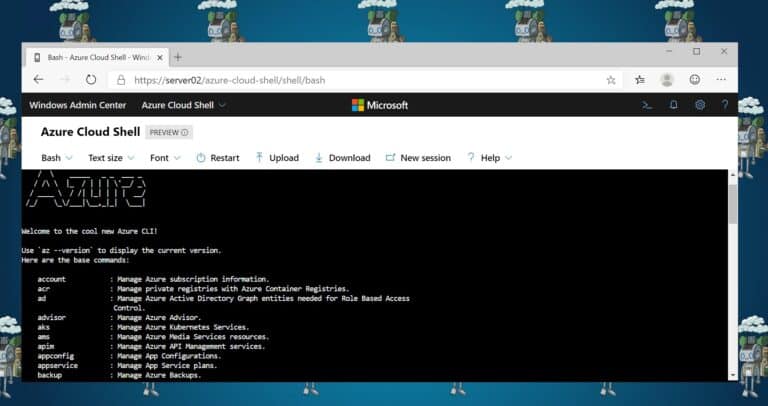
After the installation has finished you can now remotely access the Windows Admin Center web portal form your workstation. However, if you install the new Microsoft Edge Insider Preview, which runs on Windows Server Core as well. You can access the console form your local machine. Don’t do that in production, but it is great if you are running demos or you need to troubleshoot the installation.

Install Microsoft Edge on Windows Server Core

You can download the Microsoft Edge Insider from here. Thanks to Jeff Woolsey for the tip.

If you want to know more about Windows Admin Center check out my blog post and the Microsoft Docs. If you have any questions, please let me know in the comments. By the way, also make sure that you check out the Windows Admin Center Hybrid features, which allows you to easily connect Azure services.

4 responses

  1. Tom Avatar

    Fantastic article.

  2. Emily Bowman Avatar
    Emily Bowman

    Thank you! This was one of the most pressing things that I needed to know before I could fully recommend core for the small shops we work with. When the network/firewall is hosed and you don’t remember all the commands, knowing you can install some kind of local GUI administration is a big relief!

    1. Thomas Maurer Avatar

      Great to hear! Thanks Emily

  3. Jim Avatar

    Thomas,

    I cant seem to find out if and how I can access the VMs from the local machine using a type 1 VM like hyper-v 2019.

    I need 3 different images on each machine (2 win 1 Linux) and installing Window 10 type 2 hypervisor and then 3 VMs has 2 downsides, First it eats up more resources and 2nd it takes 3 license instead of 2.

    I have a lab where I have to have the institutions official image (part of a domain and locked down hard) but also need a 2nd copy so the students can have full access so they can learn Windows/IT. Right now they cant even use control panel.

    Dual boot would work but would require a lot of re-boots. I have been a fan of the idea of a type 1 VM system longer than Hyper-v has existed. In the early 90’s OS/2 2.x had VMs to run dos and dos programs. It was type 2 and as it was just dos it probably didnt matter, but I thought about what is now called type 1 as a better idea so naturally I went there to solve the problem, but once installed – I got stuck because I didn’t know you cant do anything locally. From what I just read in this article following these steps you can manage locally but can you use the VMs locally :-D ? The machines can are not server based but should have no problem running the set up described.

    If not would either Virtualbox or VMware work instead ?
    I cant seem to find an answer anywhere and you are very close and on point.

Leave a Reply

Your email address will not be published. Required fields are marked *

This site uses Akismet to reduce spam. Learn how your comment data is processed.